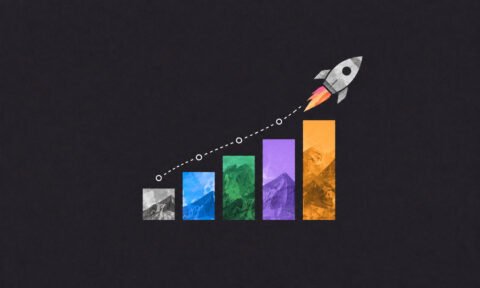
Twenty years of conversion advice says remove every step. Behavioural research says something more awkward. Effort creates value, visible work creates trust, and a product that feels too easy is often judged to be worth less than one that made you wait.
Summary
The IKEA effect shows that people value things more highly when they helped build them. The labour illusion shows that people rate a service more highly when they can see the work being done. Together these two findings mean removing all friction can reduce willingness to pay. Delete friction that costs the customer time and returns nothing. Keep friction that creates ownership, customisation or visible effort.
Internet Culture · Playbook · Psychology 001
Helps you decide: which steps to delete, which to keep, and where to add a wait on purpose.
Why this is worth ten minutes
- Frictionless is a design ideology, not a research finding. The evidence is far more interesting and it points in two directions at once.
- There is a clean line between friction that destroys value and friction that creates it. Most teams delete both with the same sweep.
- The IKEA effect explains several things that look irrational: why instant results feel cheap, why slower loading screens sometimes beat faster ones, and why the easiest onboarding often produces the worst retention.
1 The room
A product team has cut onboarding from nine steps to two. Signups are up thirty percent. Everybody is pleased.
Ninety days later, retention in the new cohort is materially worse than the old one. Nobody connects the two facts, because they were measured by different people in different meetings.
Here is a plausible explanation. The seven deleted steps were not only friction. Some of them were investment. The user who spent eleven minutes importing data, setting preferences and naming things had built something. The user who arrived in twenty seconds had built nothing, and had nothing to abandon.
Friction removal raised the number at the top of the funnel and lowered the value of every unit passing through it.
2 What is the IKEA effect and why does it change how you price?
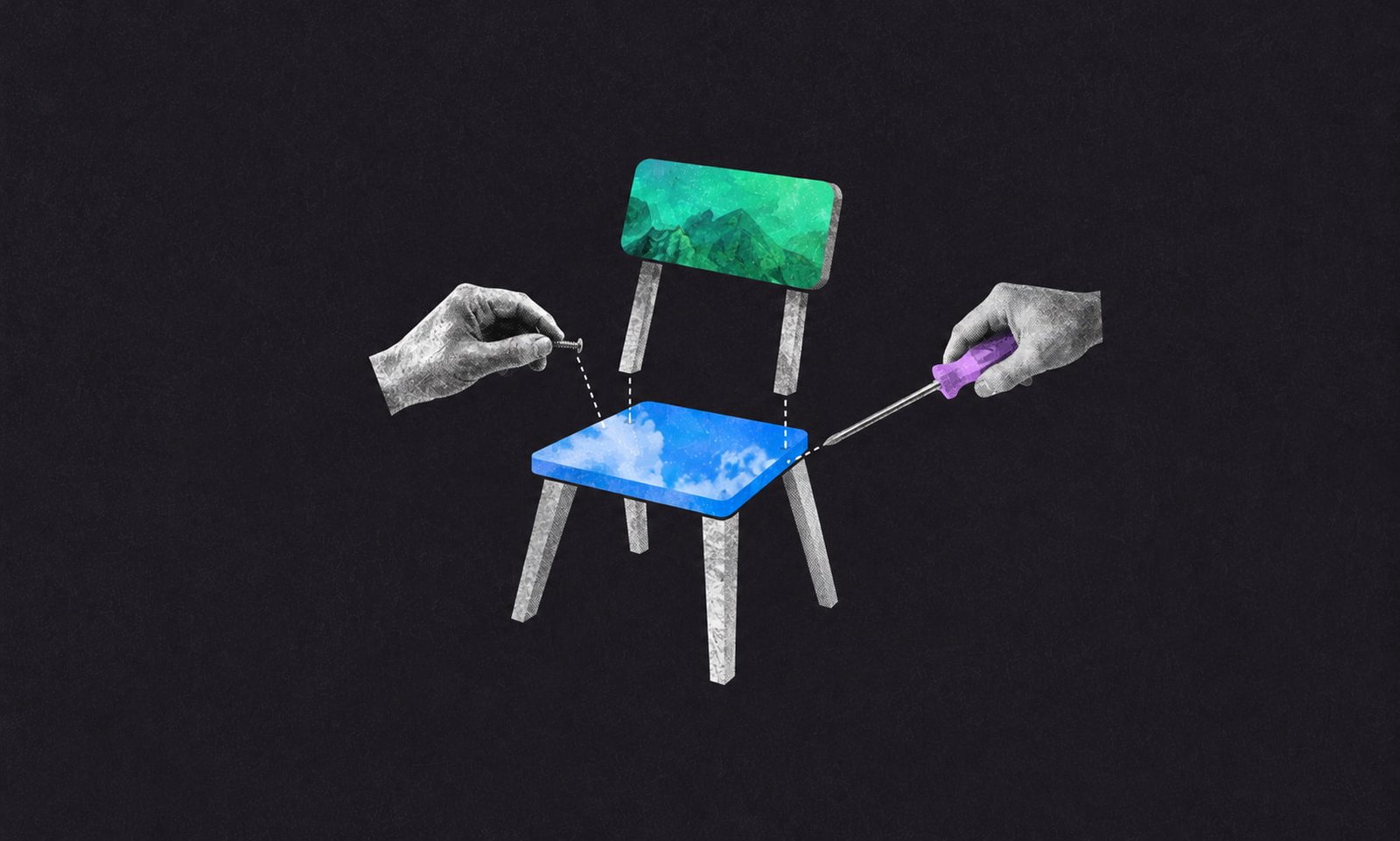
The IKEA effect is the finding that people place a significantly higher value on objects they partially assembled themselves than on identical objects assembled by someone else.
It was documented by Michael Norton, Daniel Mochon and Dan Ariely, published in the Journal of Consumer Psychology in 2012. Participants who folded origami, built IKEA boxes and assembled Lego valued their own output far above what neutral observers would pay for it. Crucially, the effect held even when the output was objectively worse.
Labour creates attachment, independent of quality. That is the uncomfortable part.
Two adjacent findings complete the picture.
The labour illusion. Ryan Buell and Michael Norton, publishing in Management Science in 2011, found that users of a travel search site rated the service more highly when it visibly displayed the work it was performing, even when displaying that work made the result slower. Hidden work is not valued. Displayed work is.
Effort justification. Elliot Aronson and Judson Mills, in 1959, found that people who underwent a more difficult initiation rated the group they joined more positively. This is why demanding applications, long waitlists and difficult onboarding can increase commitment among the people who complete them.
Put together, the conclusion is hard to avoid. Effort is not purely a cost to the customer. Effort is also an input into perceived value.
Which means “remove all friction” is not a principle. It is an optimisation for one metric, usually the metric measured closest to the click.
3 So which friction should you actually remove?
The useful distinction is between friction that takes something from the customer and returns nothing, and friction that produces something the customer can feel.
Delete: dead friction. Pure cost, no signal.
Unnecessary form fields. Forced account creation before any value. Slow pages. Confusing navigation. Hidden pricing. Re-entering data you already hold. Any step that exists because of your internal systems rather than the customer’s need.
Keep: productive friction. Cost that produces something.
Configuration that genuinely improves the product for that user. Choices that create ownership. Questions that improve the recommendation. Visible processing that demonstrates work. Qualification that signals selectivity.
The test is one question: after this step, does the customer have more, or just less time?
THE EFFORT PREMIUM
Effort spent by the customer increases attachment. Effort visibly performed by the company increases perceived quality. Effort that is invisible and produces nothing is the only kind worth deleting.
Rule 1. Make your work visible. If your system is doing something difficult, show it. Silent competence is free labour you are giving away. “Checking 1,247 options” beats an unexplained pause, even when the pause is shorter.
Rule 2. Let the customer build something. A preference, a profile, a plan, a saved configuration. This is the IKEA effect converted into retention. Users defend what they constructed and abandon what was handed to them.
Rule 3. Place friction after the value, not before it. Effort spent before any benefit is experienced is pure cost. The same effort, requested after a first win, reads as investment.
The warning: manufactured delay with no real work behind it is deception, not design. The labour illusion works because labour is actually happening.
4 The mechanism stack
01. Price and effort are read together. A service delivered instantly and effortlessly is frequently judged to be worth less. This is why consultants who reply in four minutes get questioned on their fee and the ones who take two days do not. The output is identical. The perceived input is not.
02. Investment creates switching cost from nothing. Every preference saved, playlist built, profile completed and template customised raises the cost of leaving. This is the IKEA effect doing retention work, and it costs you nothing to construct.
03. Qualification friction filters and flatters at the same time. An application form, a credit check, a minimum requirement. It reduces volume and raises the perceived value of admission. CRED’s credit score gate is this mechanism operating at national scale.
04. Removing friction moves the bottleneck, it does not remove it. Make signup instant and the drop-off usually relocates to activation. The total work required to become a real user is conserved. You are choosing where it happens, not whether.
05. Friction in UX is category-dependent. In utility and convenience categories, speed genuinely is the product and friction is pure loss. In premium, craft, advisory and credence categories, visible effort is a quality signal. Get this backwards and you will optimise a luxury brand into a commodity, or make a delivery app feel like a bank form.
5 The counter-weight
Most friction really is bad, and this idea is dangerous in the wrong hands. The overwhelming majority of friction in real products is dead friction: bad forms, slow pages, confusing flows, pointless steps. Nothing here licenses keeping a broken checkout because effort builds character.
The IKEA effect has boundaries. Norton, Mochon and Ariely found the effect holds when the task is completed successfully. Effort that ends in failure produces the opposite result: frustration and lower valuation. Productive friction must be completable.
The labour illusion has a ceiling. Buell and Norton found the effect reverses past a point. Sufficiently long waits destroy the benefit regardless of how elegantly the work is displayed.
This is easily abused. Fake progress bars, artificial scarcity timers and manufactured delays are dark patterns. India’s Central Consumer Protection Authority published guidelines on dark patterns in 2023 that address several adjacent practices directly. The line is honesty. Display work that exists. Do not invent work that does not.
Conversion rate and customer value are different metrics. Everything in this piece is an argument for measuring both. A change that lifts one and quietly lowers the other is the most common self-inflicted wound in growth.
Internet Culture verdict desk
Effortless is a feature in a category that sells speed. In every other category, effortless is how a product tells the customer that nobody worked very hard on this.
6 Steal this
01. Audit every step in your flow with one question. After this, does the customer have more, or just less time? Delete the second kind. Keep the first.
02. Make one invisible process visible this month. Show the search, the check, the calculation, the review. Measure perceived quality, not only completion rate.
03. Add one small act of construction early, and let the IKEA effect do the retention work. Let the user name something, choose something or configure something in the first session. Measure ninety day retention against a control.
04. Move friction downstream. Take your highest drop-off step and place it after the first moment of value rather than before it. Same work, different position, usually a different result.
05. Test a qualification step, if your category supports it. An application, a minimum, a short assessment. Measure lead quality and close rate, not lead volume.
06. Check both numbers on every friction change. Conversion, and ninety day value. If you only look at the first, you will keep making decisions that look good on Monday and cost money in April.
7 Frequently asked questions
What is the IKEA effect in marketing?
The IKEA effect is the finding, documented by Norton, Mochon and Ariely in 2012, that people value objects they partially created more highly than identical objects they did not build. In marketing and product design, the IKEA effect means customer involvement in setup, configuration or personalisation increases attachment and reduces the likelihood of switching.
What is the labour illusion?
The labour illusion, from research by Ryan Buell and Michael Norton in 2011, is the finding that people rate a service more highly when they can see the work being performed, even when visible work makes the service slower. Displaying effort raises perceived value, while hidden work is systematically undervalued.
Is removing all friction from a customer journey always good?
No. Friction that costs the customer time without producing anything should be removed. Friction that creates investment, customisation or visible evidence of work can increase perceived value and retention. The distinction is whether the customer has more after the step, or simply less time.
Can adding friction increase conversions or customer value?
Adding friction rarely increases immediate conversion rate, but it can increase customer value, retention and willingness to pay by creating ownership and signalling quality. This is why qualification steps, configuration flows and visible processing can improve business outcomes even while reducing top-of-funnel volume.
How do I use the IKEA effect in onboarding without hurting signups?
Place the construction step after the first moment of value rather than before it. Let the user experience one result, then invite them to personalise, configure or name something. The IKEA effect requires the task to be completable and worthwhile, so keep it short and make the benefit obvious.