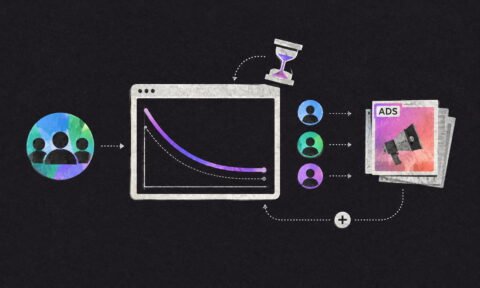
The campaign is working. ROAS looks healthy. Someone says the obvious thing: “Let’s double the budget.” It feels like the safest call in the room. It’s often the most expensive one, because the next customer you buy almost never costs what the last one did.
Summary
The right time for when to scale ads is when five things are true. Retention has flattened, each order makes money after delivery costs, the payback on the next customer fits your cash runway, the ads are creating sales that wouldn’t happen anyway, and the audience still has room. Average CAC hides the real cost of growth. Judge the cost of the next rupee, not the average.
Internet Culture · Playbook · Growth 03
Helps you decide: whether to raise your ad budget this month, hold it, or fix something else first.
Why this is worth ten minutes
- Most teams decide when to scale ads by looking at ROAS. ROAS tells you about the past average. Scaling is a bet on the next customer.
- Doubling a budget rarely doubles customers. The gap between the two is where margins disappear.
- Five simple checks tell you if your business can absorb more spend, or if more spend will just make losses bigger.
1 The room
A D2C brand spends ₹5 lakh a month on Meta. It wins about 1,000 new customers. CAC is ₹500. Everyone’s happy.
So they double the budget to ₹10 lakh.
Next month they get 1,500 customers, not 2,000. The dashboard shows a CAC of ₹667. “A bit higher, still fine,” says the growth lead.
It isn’t fine. The extra ₹5 lakh bought only 500 extra customers. Each of those cost ₹1,000. The average hid it, because the cheap customers from the first ₹5 lakh made the expensive ones look normal.
Nobody in the room looked at what the next rupee bought. That’s the number that decides when to scale ads.
2 Why does CAC go up when you scale ads?
Ad platforms show your ads to the most likely buyers first. When your budget is small, you’re reaching the people who were nearly ready to buy anyway.
When you raise the budget, the platform has to go further. It shows ads to people who are less interested, less ready, or who already saw your ad three times. They need more impressions and bigger discounts to convert.
So every extra rupee buys a slightly worse customer than the rupee before it. That’s normal. It’s how auctions and audiences work.
The cost of that next customer has a name: marginal CAC.
| Month 1 | Month 2 | |
|---|---|---|
| Ad spend | ₹5,00,000 | ₹10,00,000 |
| New customers | 1,000 | 1,500 |
| Average CAC | ₹500 | ₹667 |
| Marginal CAC (extra spend ÷ extra customers) | ₹1,000 |
Illustrative numbers to show the method, not real company data.
The average rose by a third. The cost of the new customers doubled.
3 When to scale ads: the 5 checks
Check 1. Has retention flattened?
Plot your monthly cohorts. If customers keep dropping towards zero, you have a leaky bucket. Scaling spend just pours more water in. Wait until the curve flattens and some customers clearly stay.
Check 2. Does each order make money after delivery?
Look at contribution margin after product, shipping, packaging, payment fees and returns. If that number is thin or negative, more orders mean more losses.
Check 3. Does the next customer pay back in time?
Divide marginal CAC by the monthly contribution margin per customer. In the example above, if each customer leaves ₹150 a month, the average customer pays back in about 4.4 months. The new ones take about 6.7 months. Is that within the time your business can wait for its money?
Check 4. Are the ads creating new sales?
Some people who click your ad would have bought anyway. Run a simple holdout: pause ads in one city or for one audience and compare sales against a similar group that still sees them. The difference is the sales your ads actually create. That’s incrementality testing.
Check 5. Is there room in the audience?
Watch frequency (how often the same person sees your ad), click-through rate and cost per thousand impressions. If frequency is climbing and clicks are falling, the audience is tired. More budget will mostly buy repeats.
THE NEXT RUPEE TEST
Never judge a budget increase by your average CAC. Judge it by what the next rupee buys. If the next customer can’t pay back within the time your cash allows, don’t scale.
Rule 1. Scale in steps. Raise the budget by 20 to 30 percent, wait for clean data, then decide again. Big jumps hide what changed.
Rule 2. Calculate marginal CAC every time. Extra spend divided by extra customers. It takes two minutes.
Rule 3. Set a payback ceiling before you scale. Decide the longest payback you’ll accept, in months. Stop when the next customer crosses it.
4 The mechanism stack
01. ROAS flatters early. Return on ad spend counts revenue, not profit, and it’s usually an average. A high ROAS can sit on top of a product that loses money on every order after delivery and returns.
02. Platform numbers count credit, not cause. Ad platforms report the sales they can link to an ad. Some of those people were already going to buy. That’s why platform ROAS often looks better than the real lift from a holdout test.
03. Cash decides, not profit on paper. A customer who pays back over twelve months still needs you to fund twelve months of cost. Fast-growing brands often run out of cash while showing “good unit economics”.
04. Creative runs out before money does. Many campaigns stop scaling because the ads get stale, not because the budget ran out. Fresh creative can lower marginal CAC more than any targeting trick.
05. Operations must keep up. More orders mean more stock, packing, delivery and support. If any of those slip, returns and complaints rise, and your new customers turn into one-time buyers.
5 The counter-weight
Sometimes speed matters more than efficiency. In a race for a new category, a well-funded brand may choose to scale fast and accept a higher marginal CAC to win customers before rivals do. That’s a valid choice if it’s made on purpose, with the cost understood.
Holdout tests need volume. Small brands may not have enough orders to get a clear result from a geo or audience holdout. Use them where you can and treat small samples carefully.
Marginal CAC is noisy month to month. Seasons, festivals and sales change costs. Compare like periods, and don’t overreact to one bad week.
Repeat purchases change the math. If customers buy often, a long first-order payback can still work. That’s only true if you’ve actually seen those repeat purchases in your cohort data, not just hoped for them.
Internet Culture verdict desk
Scaling ads doesn’t make a good business. It makes a business bigger, in whatever direction it was already going.
6 Steal this
01. Take your last two budget increases. Calculate marginal CAC for each.
02. Write down your payback ceiling in months. Get finance to agree to it.
03. Plot cohort retention for the last six months before your next scaling meeting.
04. Run one holdout test this quarter: one city or one audience with ads paused.
05. Scale in 20 to 30 percent steps. Wait at least a week or two of steady data before the next step.
06. Refresh creative before raising spend. Sometimes the cheapest scaling move is a new ad.
7 Frequently asked questions
When should you scale ads?
Scale ads when retention has flattened, each order is profitable after delivery and returns, the payback on the next customer fits your cash runway, the ads create real additional sales, and the audience isn’t saturated. If any of these fail, fix that first.
What is marginal CAC?
Marginal CAC is the cost of each additional customer when you increase spend. It’s calculated as extra ad spend divided by extra customers gained. It’s usually higher than average CAC because each extra rupee reaches less interested buyers.
Why does CAC increase when scaling ad spend?
Ad platforms first show ads to the people most likely to buy. As budget grows, they reach less interested audiences and show ads more often to the same people. Each extra customer becomes harder and more expensive to win.
How much should I increase my ad budget at once?
Many teams raise budgets in steps of around 20 to 30 percent, then wait for stable results before increasing again. Large jumps make it hard to see whether costs rose because of the budget or other changes.
What is incrementality testing in advertising?
Incrementality testing measures sales your ads actually cause. You pause ads for one region or audience, keep them running for a similar group, and compare the results. The difference shows the real lift from advertising.